Co-building is the most effective approach for scaling XaaS models


Scaling XaaS (Everything as a Service) is far more complex than most organizations anticipate because of internal misalignment and high resource demands. That is according to a new report from BearingPoint and Black Winch, which finds that co-building with partners is the most effective approach.
The XaaS model involves the delivery of various solutions, applications, products, and technologies as a service. While the promise of recurring revenue and stronger customer relationships is attractive, internal teams often struggle to align technology, finance, operations, and sustainability objectives. The journey from a strategic ambition to a global rollout frequently becomes slow, costly, and frustrating for those who are unprepared.
A rapidly expanding market
The global market for these services is projected to see significant growth in the coming years. Research shows the sector rising from approximately $340 billion in 2024 and continuing to grow by more than 23% annually to reach $1.2 trillion by 2030. Major tech companies like Microsoft, Amazon, Google, and IBM already offer various XaaS services, including SaaS and IaaS (infrastructure as a service).
These platforms unite capabilities in AI, big data, and hybrid cloud, allowing businesses to bridge data and deliver cutting-edge services. These offerings allow enterprises to experiment with new technologies without incurring large upfront costs, facilitating faster digital transformation.
Shifting the business foundation
The report emphasizes that XaaS is not merely a change in pricing; it is a fundamental shift in how an entire business operates. In traditional models, products and services often exist in separate silos with their own contracts and systems. XaaS brings these elements together as one package for the customer.
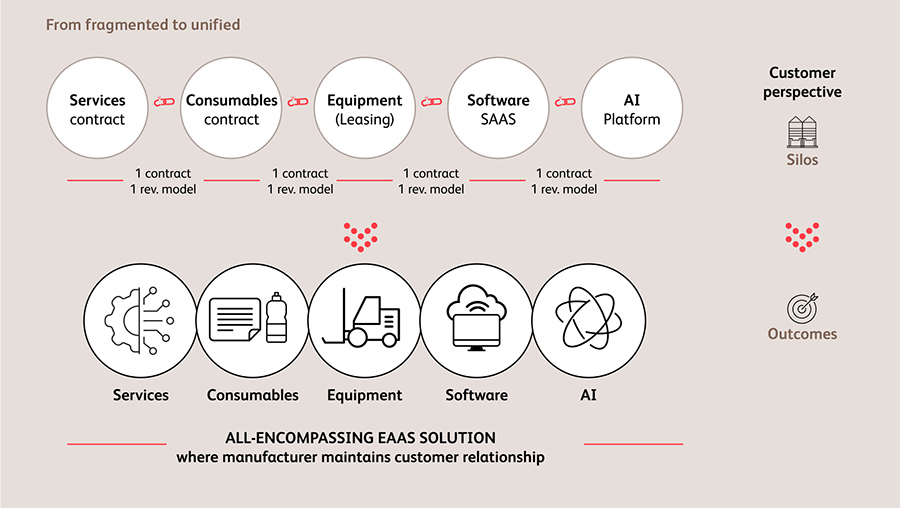
This requires the organization to function as a unified, outcome-driven system. Instead of selling a product once and transferring ownership, the manufacturer maintains the relationship and ensures the solution works every day. This transition separates revenue from costs, as many expenses occur upfront while earnings are spread over the lifetime of a contract.
Financial hurdles and cash flow
One of the primary reasons scaling proves difficult is that it breaks traditional financial logic. Under a service model, assets often remain on the balance sheet of the provider rather than being transferred to the customer. This creates intense pressure on cash flow.
Many initiatives fail to grow because available cash cannot support the necessary expansion of equipment and resources. Profitability depends on sustained performance over years rather than a single transaction. Success requires managing funding sources and risk distribution effectively as the volume of services grows.
"These challenges do not mean XaaS is unachievable," the report notes. "They mean success requires a different approach. Organizations that recognize these risks early and partner with experienced experts avoid costly delays and structural constraints."
The hidden costs of internal projects
Organizations often assume that building XaaS capabilities internally is the most cost-effective route, but the report identifies several hidden risks. When internal teams must learn by doing, the process consumes significant management energy and capital.
Training for one person can cost around $11,500. Furthermore, the loss in productivity during the learning phase is often close to 20% of the revenue target. Delays in the launch of a service typically lead to missing about 10% of the revenue target altogether. Other expenses, such as onboarding and the renegotiation of employee roles, can add between 10% and 15% to salary costs.
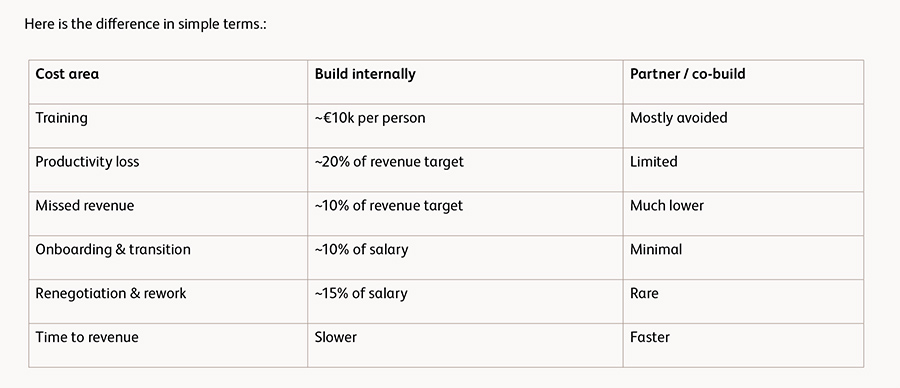
"Working with experienced partners changes the picture," state the authors. "You skip most of the learning curve. Expertise is there from day one. Less training. Less rework. Less time lost. Teams stay focused, and revenue starts earlier."
Co-building with partners
To mitigate these risks, the report suggests a third path: Co-building with experienced partners. This approach allows a company to maintain ownership of its operations while leveraging external expertise to design the model and financial architecture.
External experts bring lessons learned from scaling similar models across different industries, helping to avoid mistakes that slow down growth. By designing for scale from the very first day, businesses can ensure that their financial decisions are based on clear models rather than assumptions.
Navigating modern challenges
While XaaS offers benefits like increased innovation and remote deployment, enterprises must also navigate challenges such as security and resiliency. Since these services depend on cloud connectivity, any disruption can impact operations.
Beyond that, using AI and the Internet of Things increases data processing requirements, making a strong approach essential for performance. By aligning leadership and processes across the organization, businesses can move beyond the ‘make or buy’ dilemma and build models that perform and endure in the long term.