Electric trucks gain ground in Europe despite adoption challenges


As electric truck development matures, the European logistics industry’s focus shifts from innovation to large-scale implementation. That is according to a new report co-authored by consulting firm AllChiefs, which maps the route to sustainable logistics.
Europe is set to see a sharp rise in sales of medium and heavy duty Zero-Emission Trucks (ZETs) as innovation is no longer the primary challenge for Original Equipment Manufacturers (OEMs) – the main challenges now are making electric trucks cost-effective and successfully scaling up electrification.
The report is a collaboration between AllChiefs, innovation specialist HYVE, Scania, and the Smart Freight Centre. It features insights from over 100 industry experts and 50 organizations. One main takeaway is that collaboration across the entire logistics ecosystem will be essential for achieving competitive, net-zero road transport in Europe.
The global transition to ZETs is clearly accelerating. In just the first half of 2025, 90,000 units were sold, with 90% of that in China. Europe, however, is set to be a key driver of growth going forward, especially in the Dutch, Swedish, and Swiss markets, which have achieved adoption rates of around 10%.
“European manufacturers are investing heavily and technology is no longer the problem,” according to the report. “It is creating scale – because with scale, ZET prices will come down faster as battery prices are already falling globally. Uptake in Europe is, however, still too slow to meet 2030 climate targets.”
The European Union has mandated ambitious sustainability goals that will oblige truck original equipment manufacturers (OEM) to cut their average emissions by 45% before 2030. That would mean ZETs would make up around 35% share of all truck sales at the start of the next decade.
Meeting climate targets
Despite the rapid global rise of zero-emission trucks, with sales in the first half of 2025 nearly matching the total for all of 2024, the report finds that European adoption must accelerate to meet 2030 climate targets.
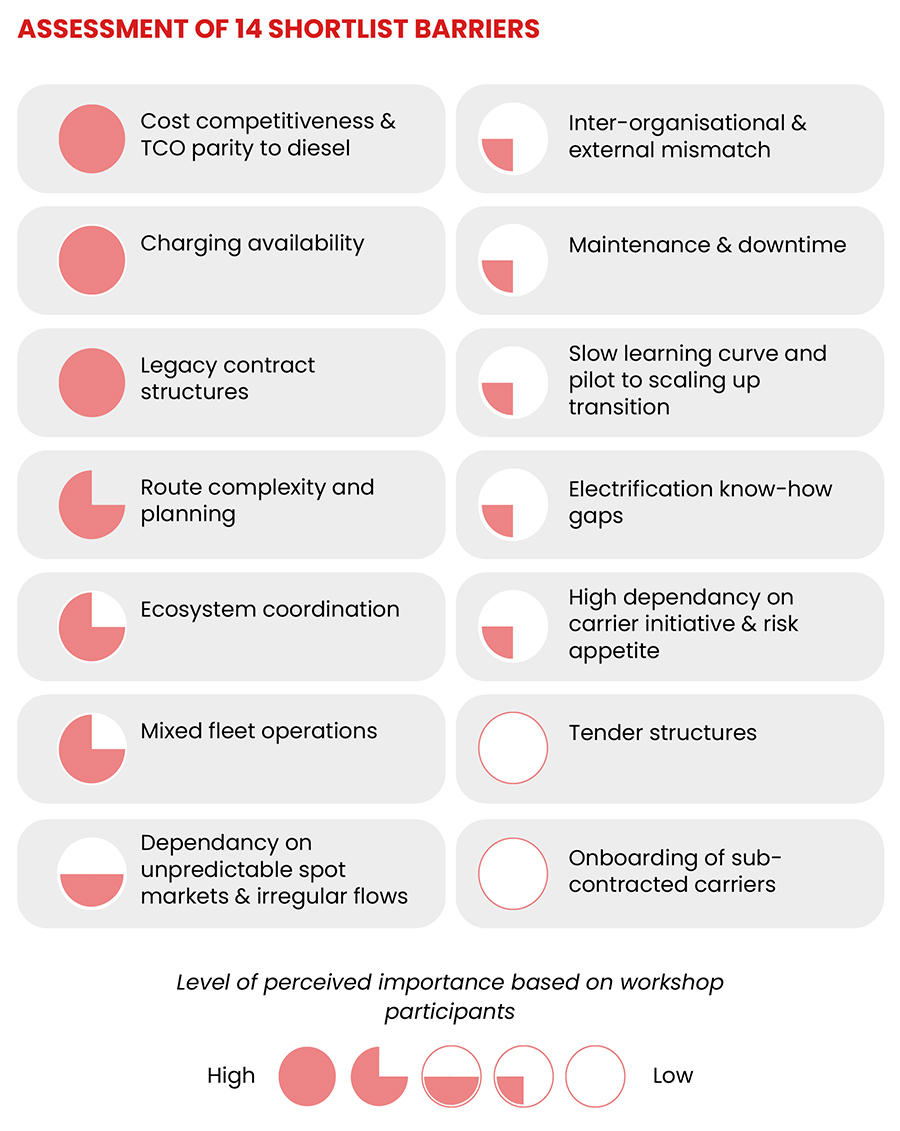
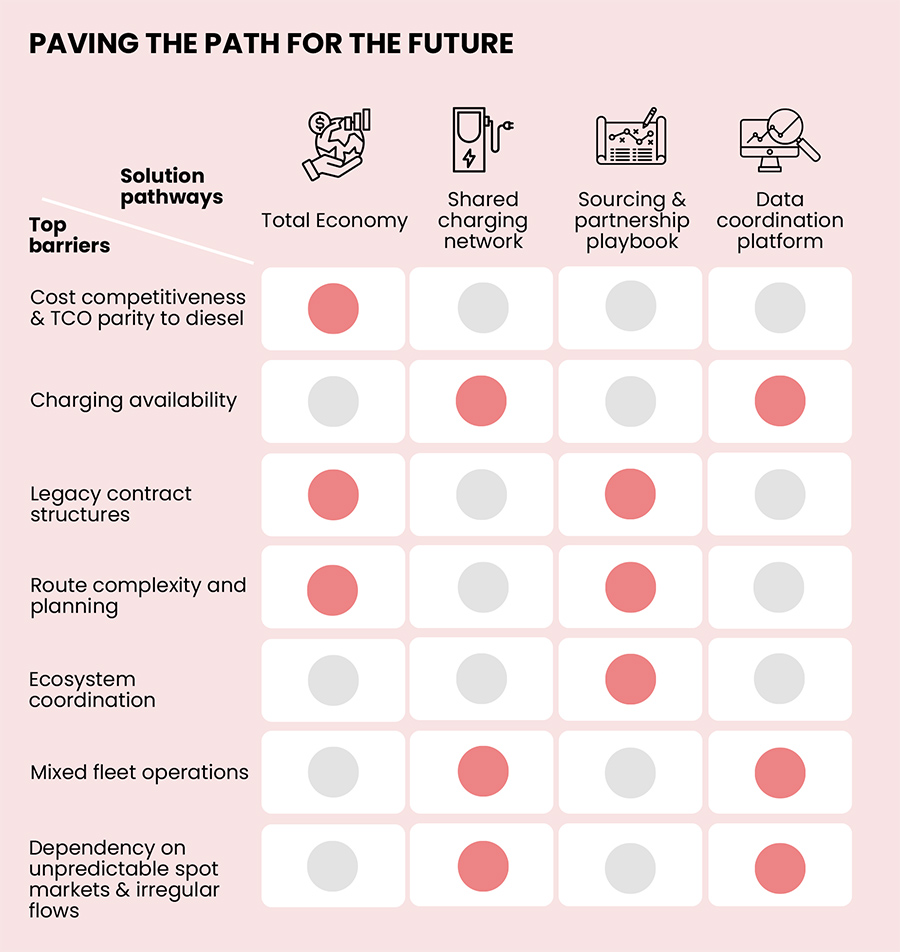
While leading markets like the Netherlands and Sweden have made strides in electrifying truck fleets, many companies still face a long list of barriers. The primary obstacles identified include the high cost of electric vehicles compared to diesel, a lack of reliable charging infrastructure, congestion of the electricity grid and outdated contract structures that favor short-term fossil-fuel operations.
Possible solutions
To overcome these hurdles, the report proposes several pathways to move the industry beyond small-scale pilot projects. These include the creation of shared and affordable charging networks and the implementation of a specialized partnership playbook for sourcing electric transport.
In addition to that, the report also advocates for a data and infrastructure coordination platform to optimize charging and energy use across the grid. Indeed, the report notes a lack of heavy-duty charging infrastructure, which can only be solved with more public and private coordination.
One carrier surveyed noted: “We can’t scale because the chargers just are not there when we need them.”
A central theme of the findings is the need for a fundamental shift in how the industry operates, moving from traditional buy-and-sell relationships to deep partnerships that share both investment and risk.
Governments play an important role in stimulating demand through strategic public procurement and by de-risking investments for private operators. By aligning business strategies with these collaborative solutions, the report suggests that Europe can transform its logistics sector into a globally competitive, zero-emission powerhouse.
“Electric trucks are defining the future of net zero road transport & logistics and provide a potential competitive advantage for Europe,” reads a press release from AllChiefs.
“The challenge is no longer innovation; it is building the scale to make it not only the most sustainable but also the most cost-effective solution. Scale only happens through activating collaboration across the entire logistics ecosystem, including shippers, carriers, LSPs, OEMs, financiers, charging providers, governments and grid operators.”