Report: Sustainability becomes new standard for European manufacturing

In the rapidly evolving landscape of European manufacturing, sustainability initiatives are no longer just a go-to-have ‘green’ projects. Sustainability is now seen as a fundamental requirement for business survival, according to a new report from 9altitudes.
Industry experts now view the shift toward Industry 5.0 – which prioritizes human-centricity and environmental responsibility – as a strategic necessity to remain competitive in a global market defined by volatility and strict regulation. For many organizations, the ability to prove their environmental impact is becoming their primary ‘license to operate’.
The report from 9altitudes, which surveyed more than 120 organizations across the European manufacturing sector, reveals that this transformation is being propelled by heavy external pressure from regulators, but also from other stakeholders.
Pressure to go sustainable
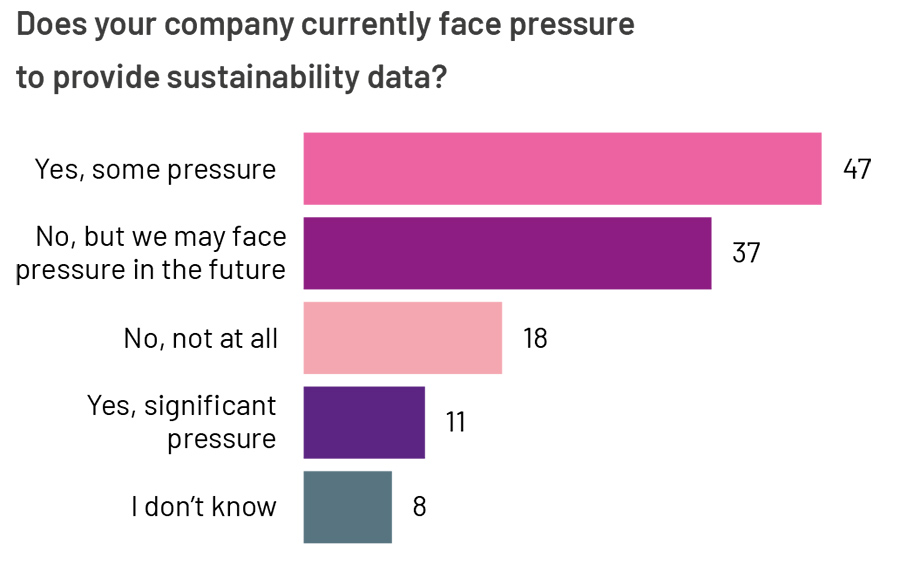
Nearly half (47%) of companies surveyed said they have felt pressure to provide sustainability data, with a quarter of companies saying that their sustainability efforts are primarily driven by customer expectations.
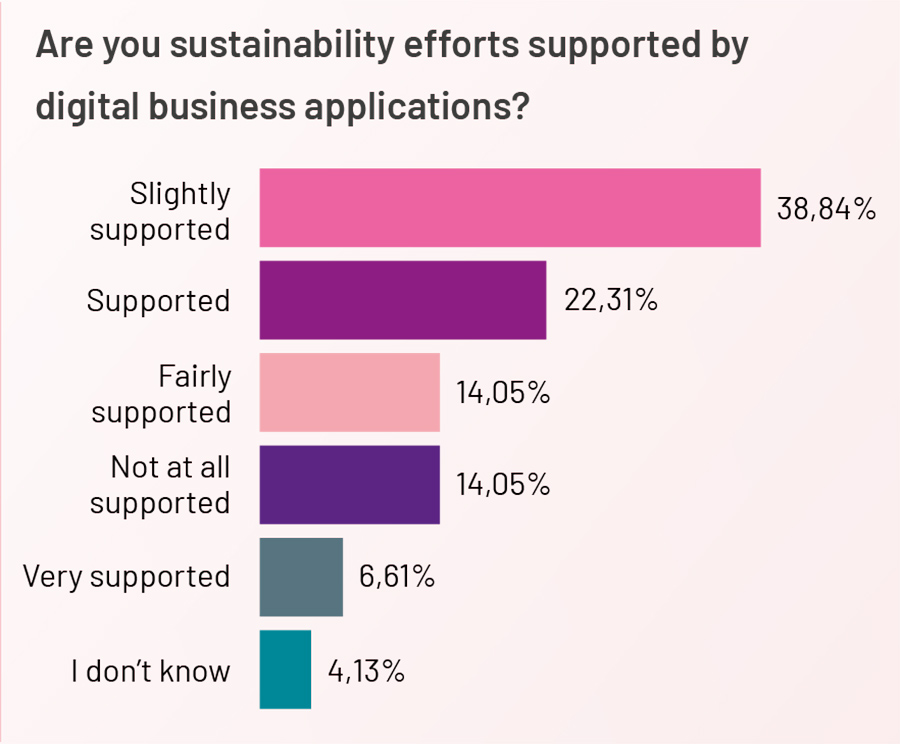
The survey also found 31% of respondents now consider sustainability reporting to be very important to their stakeholders. Despite this growing importance, a significant gap remains in readiness. Currently, 75% of companies lack the necessary data infrastructure to properly manage their sustainability information.
“The reality is clear: Those who fail to apply AI to gain an advantage will fall behind,” said Niels Stenfeldt, CEO of 9altitudes. “Change is accelerating, and companies that rely on yesterday’s tools will not keep up with tomorrow’s demands. Because in the end, sustainable companies are not just greener - they are smarter, faster, and built to last.”
Digital Product Passports
The notable lack of data is particularly critical given the approaching regulatory deadlines. For example, the European Union mandate for Digital Product Passports (DPP), set to begin taking effect in 2027, will require transparent documentation of a product’s composition, production methods, and recycling potential.
Industry leaders warn that if businesses do not start capturing this data now, they will find it nearly impossible to reconstruct the missing years of information required for future compliance. Most of the respondents said that their companies do not currently have any strategy in place for managing sustainability under the DPP regulation.
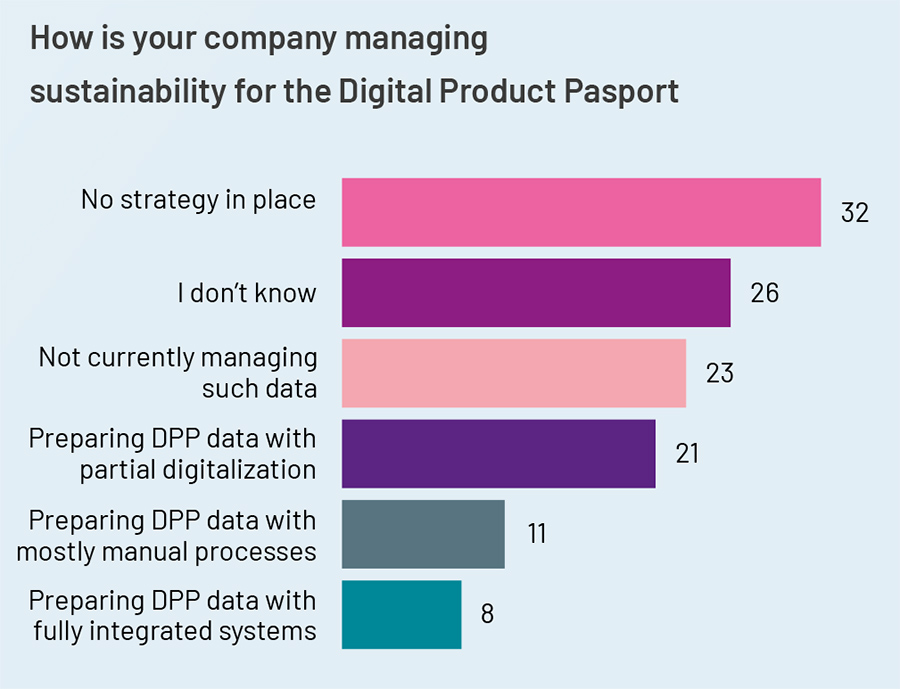
“The most striking insight is that a significant number of survey respondents either lack data management, have no clear strategy, or are simply unaware of their company’s DPP approach,” said Diederick Hallynck, CTO at 9altitudes.
“To stay ahead, companies must act now, don’t wait until it’s too late to prepare for the future.”
AI could power sustainability
AI is emerging as the vital link between these reporting burdens and true business value. Rather than merely automating routine tasks, AI is being used to redesign the innovation process by simulating thousands of design scenarios. This allows engineers to optimize for both cost and sustainability simultaneously.
In addition to that, embedding sustainability into the early design phase can help companies implement circular economy practices that have the potential to recover between 60% and 95% of a product’s environmental footprint, the report notes.
The financial and operational benefits of this shift are becoming impossible to ignore. Leaders in the sector argue that sustainable businesses are not just environmentally friendly, but are also smarter and faster because they rely on precise, real-time data rather than guesswork.
By creating a ‘digital common thread’ that connects design, production, and supply chain data, manufacturers can turn compliance into a tangible competitive advantage.
“Manufacturers who succeed are the ones who realize that it’s not just about compliancy,” said Stenfeldt. “They leverage data and modern technology to create sustainable products and processes that use less resources without sacrificing the quality.”