Spain’s hotel sector poised for expansion in the budget and economy segment

The budget hotel segment might be the next star in Spain’s hospitality industry, with current offerings well below other European countries. A new report from Alvarez & Marsal analyzes the high expectations for the low-cost category of hotels from Malaga to Barcelona.
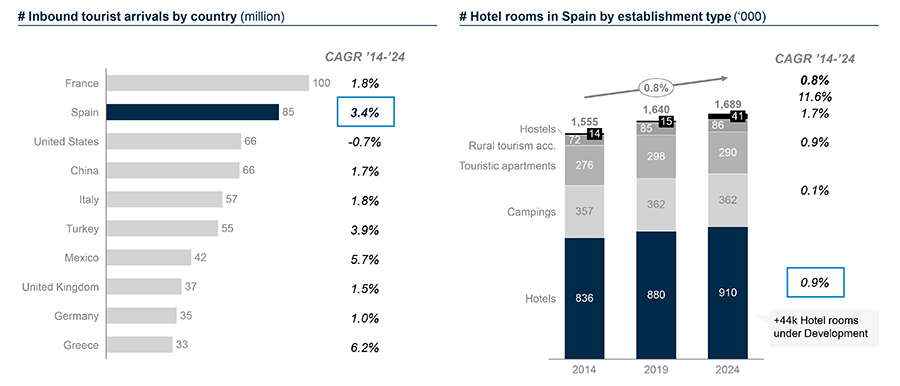
Over the past decades, Spain has solidified its position as the second most visited country in the world, hosting 85 million international visitors. However, the report points out a missing piece of the puzzle: a dominant budget hotel brand.
While tourism demand has grown by an annual rate of 3.4% since 2014, the supply of hotel rooms has only increased by 0.8%. This shortage has created a lucrative environment for the economy sector, which has seen revenue per room grow by 142% since 2019, the fastest rate of any hotel category in the nation.
The budget and economy segment
The report highlights a significant disparity between Spain and its European neighbours.
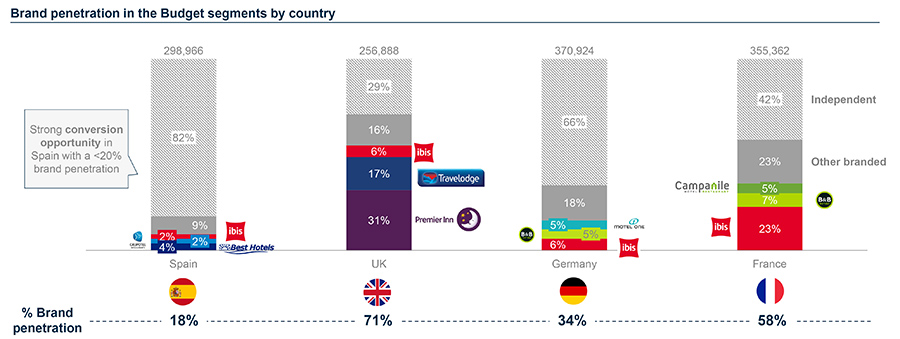
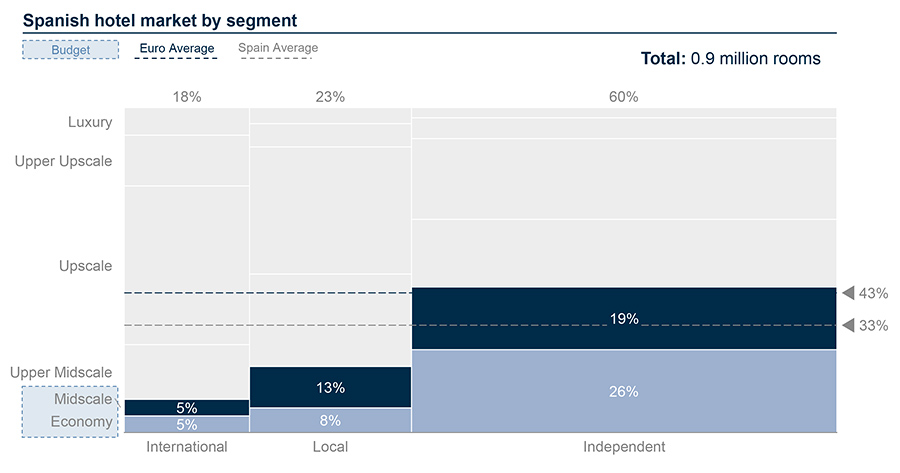
Budget hotels in Spain hold a market share that is 10% lower than the average across Europe. The gap is even wider when compared to France, where the budget segment is 25% larger than in Spain. In mature markets like the United Kingdom and Germany, well known local brands have successfully captured the budget space, but Spain lacks a similar market leader.
Currently, the Spanish budget hotel scene is highly fragmented. Only 18% of these hotels are part of an international brand, leaving 80% of the market to be operated by independent owners. This is a sharp contrast to the United Kingdom, for example, where brand penetration reaches 71%, or France, which stands at 58%.
According to Alvarez & Marsal’s report, this degree of fragmentation offers an opportunity for hotel chains in Spain to convert independent properties into branded ones, bringing more professional management and investment to the sector.
Visitors look to alternative offerings
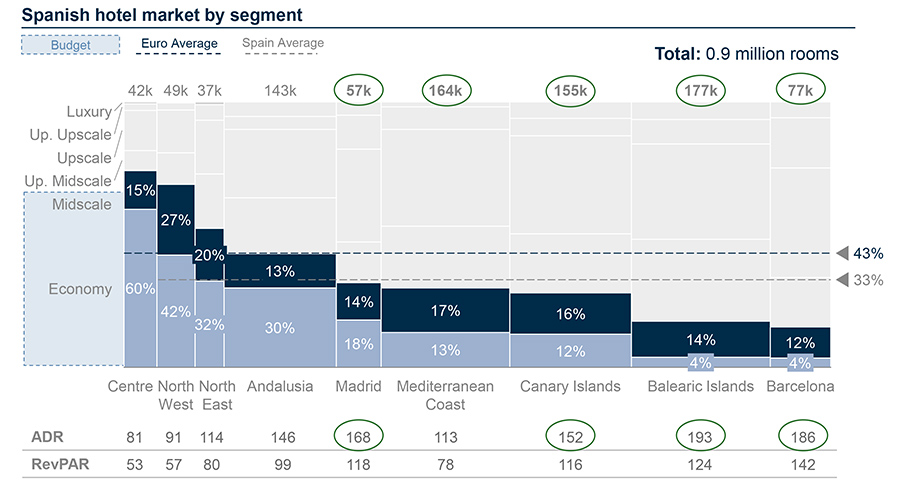
Specific regions offer the most promise for this expansion. Major hubs like Madrid and Barcelona, along with popular coastal destinations, have under-represented budget segments. In these areas, the budget share typically ranges between 16% and 32%, which is significantly lower than in other European cities.
Because of this lack of affordable hotel options, many travelers are turning to alternative choices such as hostels, campsites, and tourist apartments. These alternatives now account for 25% of all overnight stays in Spain.
These types of off-the-beaten-path accommodations are also common in Northern Spain, where budget options host thousands of pilgrims all along the hundreds of kilometers that make up the various different routes of the Camino de Santiago (St. James’ Way).
By modernizing the budget hotel experience and leveraging established brand names, companies could recapture the travelers who are currently staying in non-hotel accommodations.
Accommodations under pressure
A significant portion of tourist rentals in Spain are listed on websites like Airbnb and Booking.com. There has been growing public outrage in large Spanish cities aimed at the growing number of private homes converted to tourist stays, especially in light of the inadequate housing stock, with increasingly expensive cities like Madrid, Barcelona, and Valencia running out of living space for citizens.
Last year, Spain’s Socialist Party-led government fined Airbnb €65 million, an amount equal to six times the profits that Airbnb made with the listings while they actively violated regulations. Some local governments, like those in Barcelona and Ibiza, announced crackdowns on illegal listings, which however are still fairly common despite a long list of interventions.
Despite these measures, the debate around short-term rentals is far from settled. While platforms such as Airbnb and Booking.com argue that they support local economies by boosting tourism income and offering flexible accommodation options, critics maintain that the unchecked expansion of tourist lets continues to distort housing markets and hollow out neighbourhoods.