The boomerang consultant: ‘People remember how you leave far longer than how you arrived’

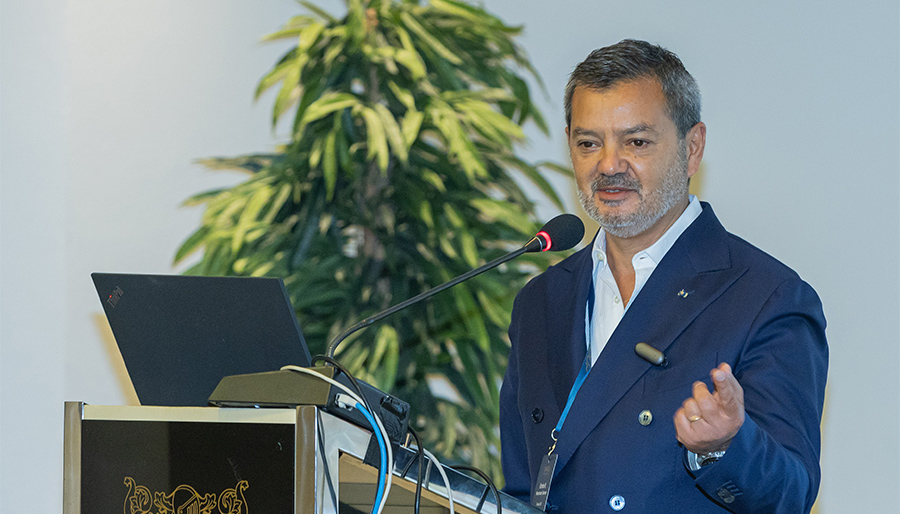
Consultants come and go, and sometimes they return to a firm where they previously worked. Yet for this so-called “boomerang process” to succeed in the consulting landscape, the return must be grounded in ethics and integrity, writes Ennio Neumann Senese, CEO of OHROS Consulting Group.
In my previous role as Partner – and now as CEO – of a management consulting firm, I have seen consultants arrive and depart. That in itself is perfectly natural; no one is meant to “own” anyone else. Typically, when consultants announce their decision to leave, the reasons are softened and the destination conveniently left undefined.
Because we embrace individual freedom and professional growth, we regret their departure but seek to hold constructive exit conversations to understand their motivations.
Then, shortly afterwards, those same consultants resurface in the market with another consulting firm – sometimes back at the very same client, often in a similar role, albeit with a more senior title.
On paper, this may appear entirely acceptable. Contracts contain clauses, and lawyers can interpret boundaries. Formal compliance can be demonstrated. Yet this is less a legal issue than a moral one.
Balancing the moral dilemma with trust
In my view, consulting is built on trust before it is built on contracts. Some may call that old-fashioned, but trust is a cornerstone of the value proposition that leading firms bring to their clients. It is reflected in the trust of clients who opened their doors, shared sensitive insights, and relied on continuity; in the trust of employers who invested in access, credibility, and opportunity; and in the trust of colleagues who assumed transparency and good faith.
When someone exits while already preparing their return under a different banner, something deeper shifts – at least in how such a move can be perceived. This is not about technicalities; it is about intent.

Professional integrity is revealed most clearly in moments of transition. Relationships built under one mandate carry responsibility. Influence earned within one firm does not automatically become neutral property. Silence, when intentions already exist, can become strategy. Ambiguity can become leverage – and leverage without transparency ultimately erodes trust.
Not from a transactional or contractual perspective, but from a moral one.
The real test lies in a few fundamental questions:
- What does integrity look like when ambition meets opportunity?
- Where does personal advancement end and stewardship begin?
- What example is being set for younger consultants who are watching closely?
- How do we honour the ecosystem that enabled our growth?
Stewardship
I view our profession as something akin to a guild: a place where you learn your craft, build relationships, and are intrinsically rewarded for the tangible value you create. Industries, however, are small. For boomerang consultants, reputations travel faster than CVs. People remember how you leave far longer than how you arrived.
Most firms choose not to pursue legal action in such cases. More often than not, it is neither economically nor emotionally worthwhile. Instead, they rely on principle, believing that professional culture matters more than courtroom victories. There remains hope that shared standards will guide behaviour where written agreements fall silent.
Yet patterns emerging in the industry challenge that belief. It may be time for leaders in consulting to speak more openly about this – not to accuse, but to reflect.
An open discussion on morality
At its highest level, consulting is stewardship. We are entrusted with people, momentum, insight, and futures. Entry matters. Delivery matters. Exit matters just as much. The most binding agreements are often not written by lawyers, but embedded in character.
If you are leaving a firm – or working with someone who has just rejoined – take a moment to reflect on where you draw the moral line. What does honour in transition mean to you? Leadership reveals itself not in what we gain, but in how we move on – for the sake of our own fulfilment, our clients’ progress, and society at large.
About the author: Ennio Neumann Senese is CEO of OHROS Consulting Group, a European consulting firm focused on the energy & utilities sectors.