Dealmaking fuels transformation drive in Europe’s transport and logistics industry
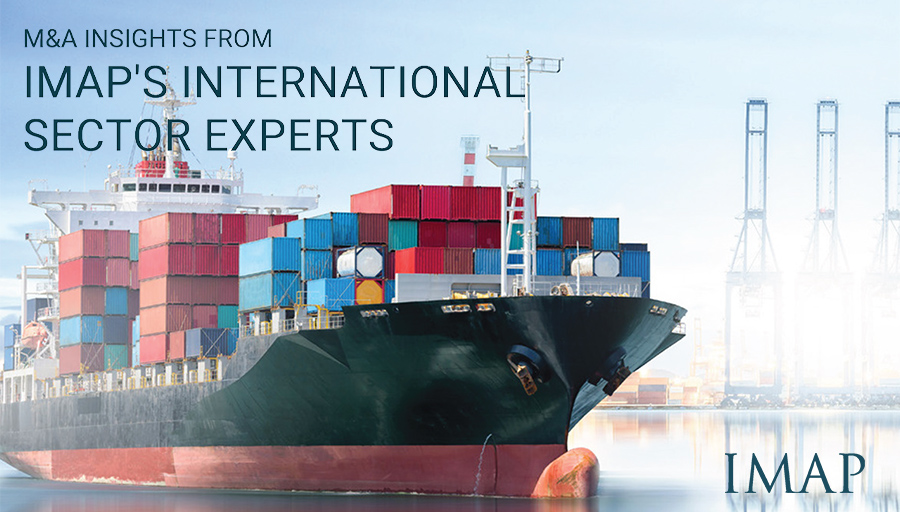
The European transport and logistics sector is facing a range of challenges, including decarbonization, mounting regulation, capacity constraints, and intensifying competition. This backdrop is seeing a growing number of industry players turn to mergers and acquisitions in order to navigate these challenges, according to a new report from IMAP.
These industry pressures on transport and logistics are driving significant investment in fleet renewal, automation, digital platforms, and value-added services. In this environment, operators with stronger network density and operational excellence are increasingly rewarded with a competitive premium.
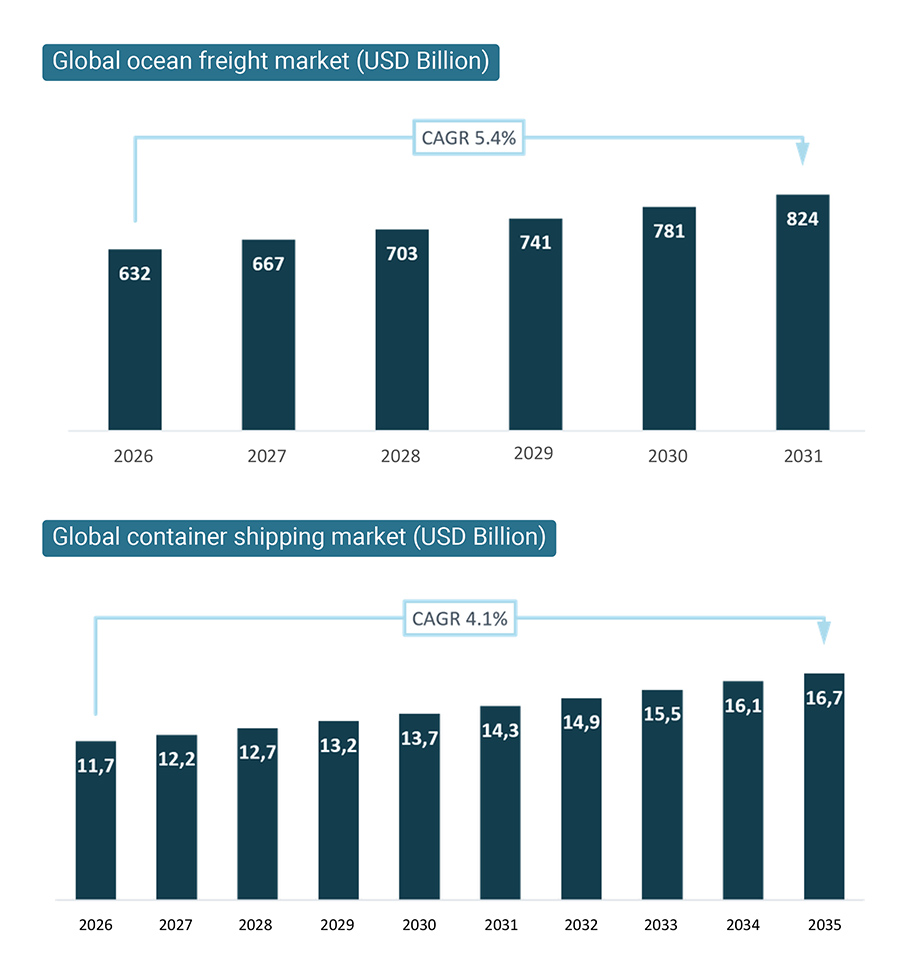
Growth in the global ocean freight sector is expected to grow with a CAGR of 5.4% to 2031, while container shipping will likely grow by 4.1%, according to IMAP. With fleet capacity surging 4% going into 2025, global ocean freight is expected to grow from $632 billion in 2026 to $824 billion by 2031.
Meanwhile, the freight forwarding market is expected to grow to $537 billion between 2026 and 2034, driven by increasing global trade volumes. The warehousing logistics market, for its part, was valued at an incredible $1.17 trillion last year and is expected to grow to $1.6 trillion by 2029. Up to 40% of that is fueled by B2C e-commerce, according to the M&A consultancy network.
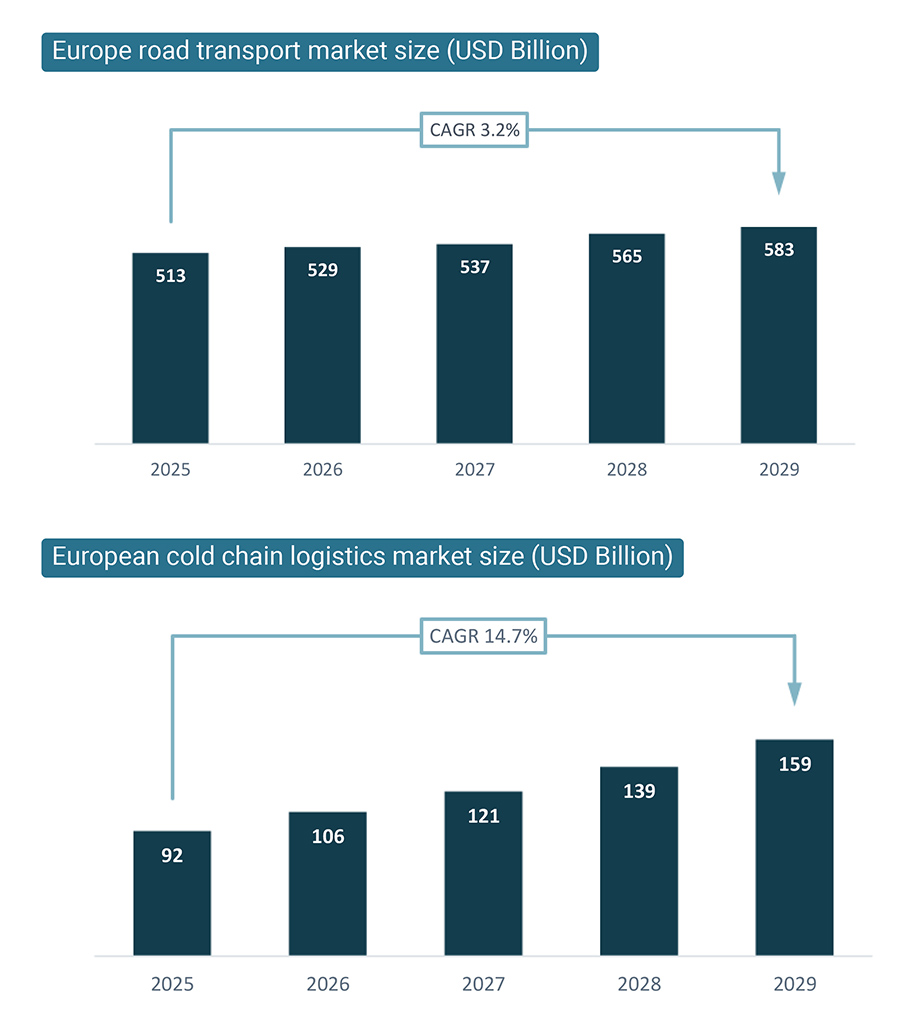
And when it comes to trucking: the European road transport market is valued at $513 billion and likely to grow to $583 billion by 2039. The European temperature-controlled transport market is valued at $92 billion in 2025 and is projected to grow by 14.7% up to 2029.
Strategic role of consolidation
Mergers and acquisitions (M&A) continue to play a critical role in enabling companies to adapt to this changing landscape at pace. Consolidation serves as a primary strategic lever to expand geographic coverage and strengthen capabilities across the logistics value chain, including specialized transport, warehousing, and forwarding.
Well-structured transactions allow companies to broaden their service offerings while improving efficiency and transparency. These deals often allow companies to secure technology and ESG components that are now essential to remain competitive.
In its report, IMAP highlights a number of recent transactions in the sector:
Geographic and service expansion: Rhenus Logistics, a leading German firm, acquired the business operations of BosDaalen in the Netherlands to strengthen its European presence in temperature-controlled transport. Similarly, the Danish company Freja expanded its Nordic footprint by acquiring ATS Cargo in Sweden.
Specialized capability building: To enhance offerings in niche markets like the automotive industry, Bertani in Italy acquired 100% of the operations of Elia, a specialist in car and commercial vehicle logistics. In another similar deal, the French group Primever entered a strategic partnership with the Dutch temperature-controlled specialist Hartman Expeditie.
Focus on investment: Investment funds and private equity are also driving M&A. For example, Everwood, a Spanish investment fund, acquired Arimon Logística to build scale in temperature-controlled logistics and last-mile distribution. Additionally, MML, an international private equity investor, acquired majority control of Virginia, a leading transport and logistics provider in Ireland.
Resilient transaction trends
Overall transport and logistics deal activity in Europe remained resilient between 2023 and 2025. Total transaction volumes increased from 479 in 2023 to 515 in 2024, before plateauing somewhat at 508 in 2025.
Despite this slight adjustment, the sector still has a relatively elevated run rate. Domestic deals still account for just over half of the market, while cross-border transactions account for slightly less of the total annual volume. This highlights the international nature of the sector and the ongoing importance of scaling beyond local markets.
Subsector insights and outlook
While valuation multiples have generally normalized, high-quality and specialized assets continue to command premiums. This is particularly true for businesses aligned with AI adoption, sustainability, and integrated service models. Looking ahead, the need for digital, door-to-door solutions and the pressure of labor shortages will likely fuel further consolidation.
“Over the coming years, we expect M&A in transport and logistics to remain active and structurally supported, albeit more selective than during the 2021-2022 peak,” notes IMAP.
“Activity levels have normalized but remain well above pre-pandemic averages, with Europe continuing to represent a significant share of global logistics transactions despite elevated interest rates and geopolitical uncertainty.”